
NearHalo Log in
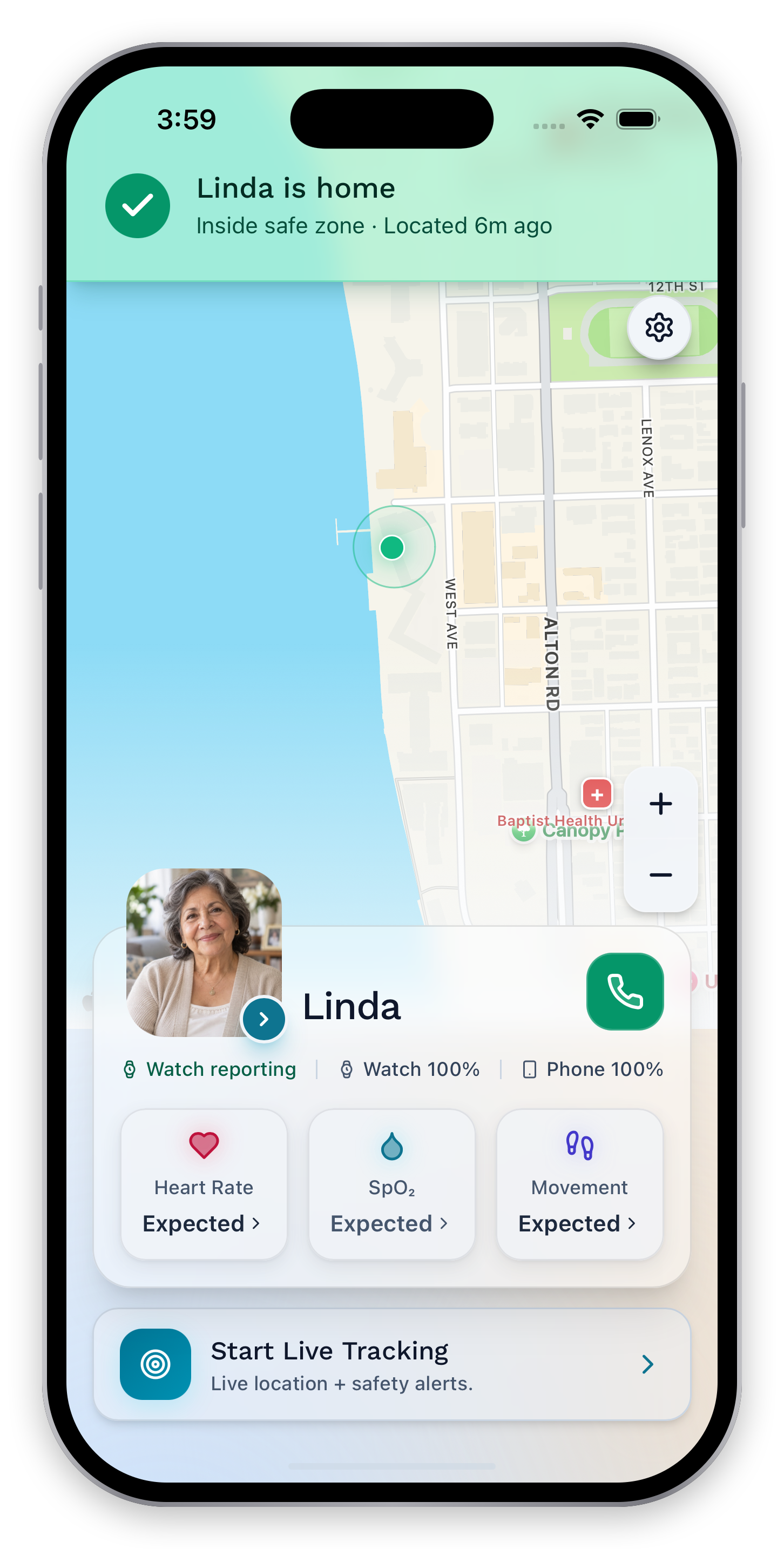
Caregiver dashboard with location freshness, connected devices, wellness readings, and Start Live Tracking.

The people you love.
A little closer.

See how your loved one is doing. Help them keep their independence. NearHalo brings shared wellness and location updates to the family members they choose.
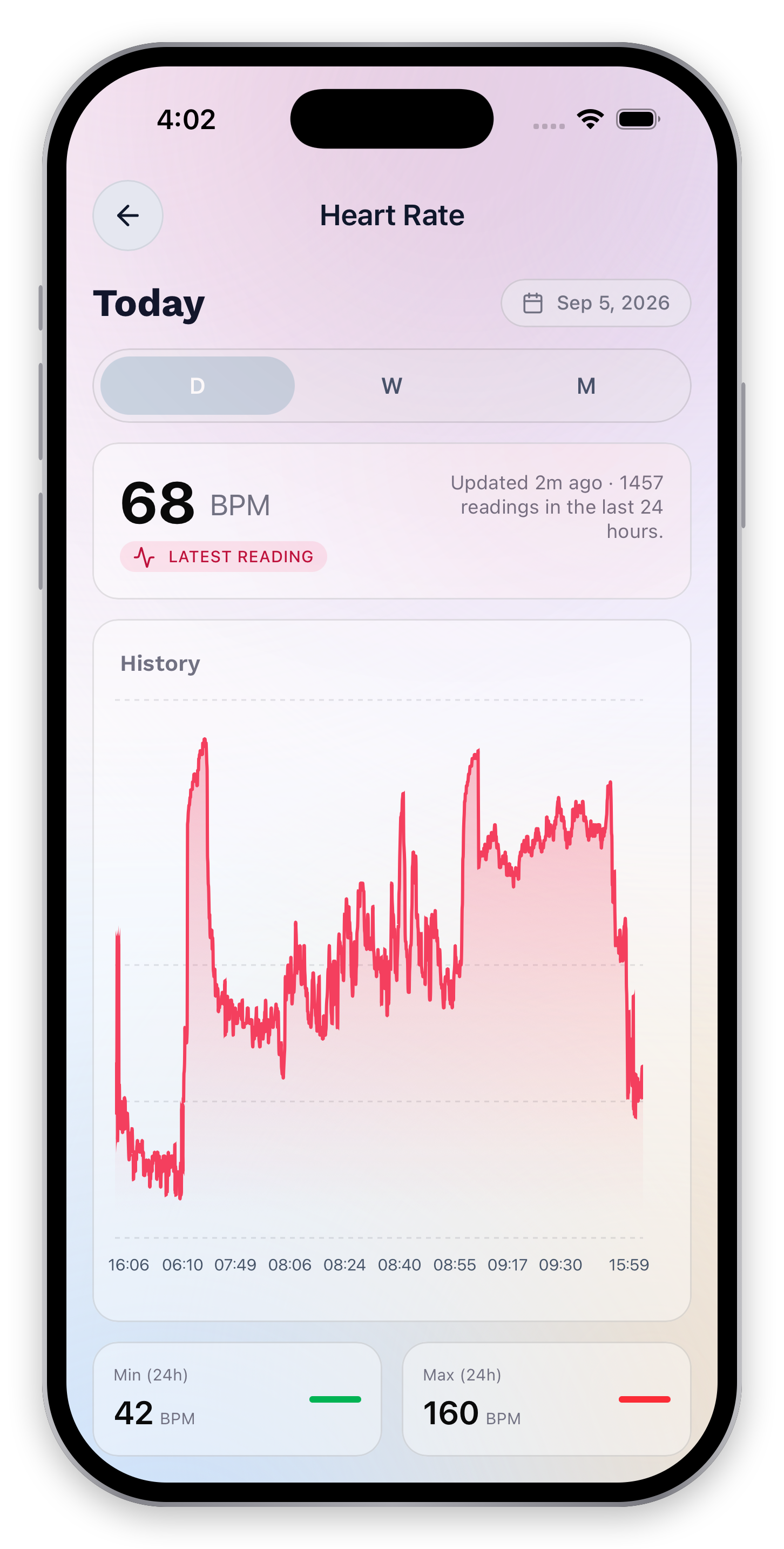
Heart-rate detail with the latest reading, update time, daily history, minimum, and maximum.

See more than
a heartbeat.

The latest reading, its update time, and the history belong together. Explore the day’s changes and the minimum and maximum along the way.
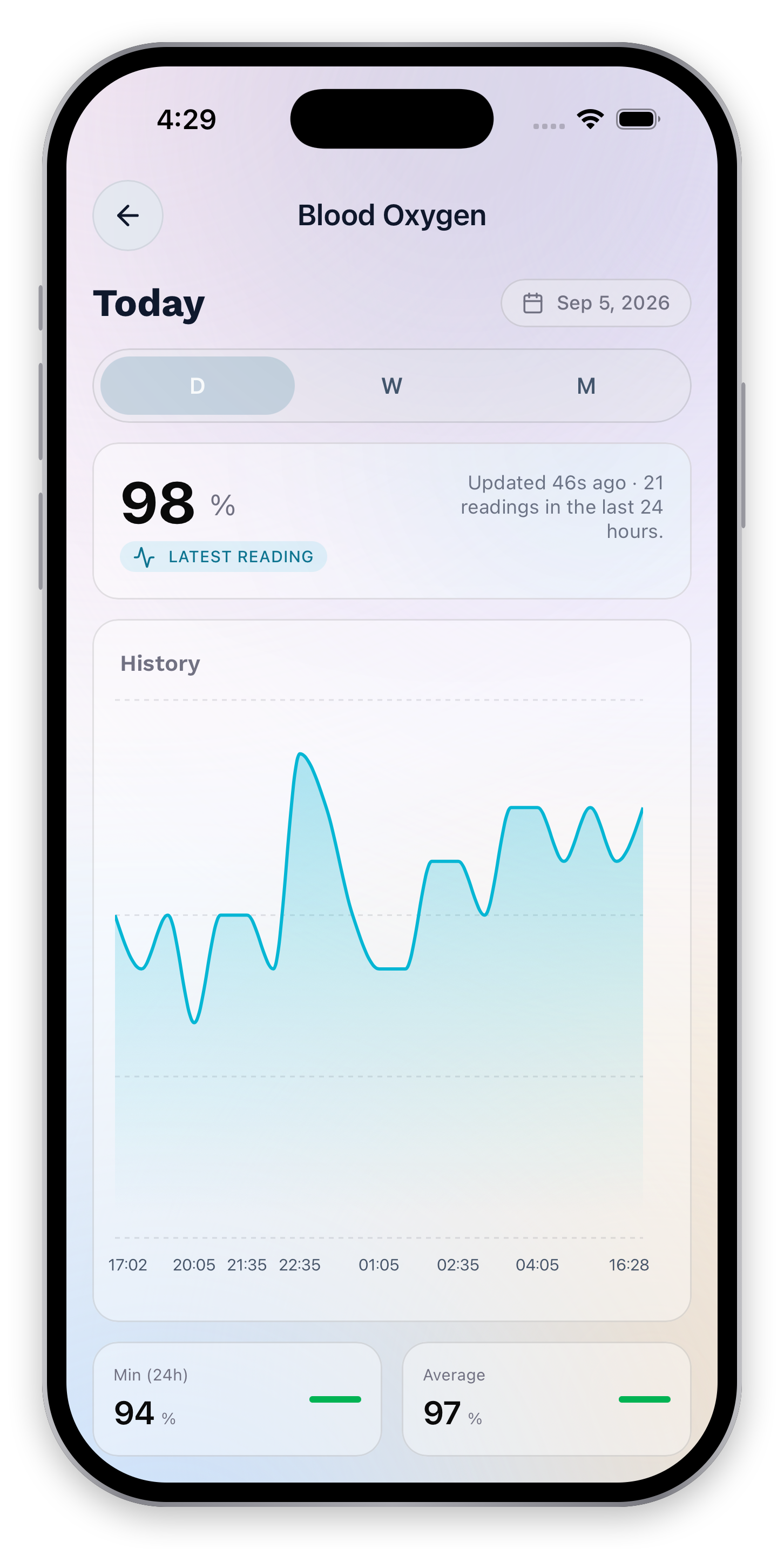
Blood-oxygen detail with the latest percentage, reading history, and day, week, and month views.

The reading.
The range.
The recent trend.

See the latest oxygen percentage alongside its freshness, history, minimum, and average. Day, week, and month views give the reading context.
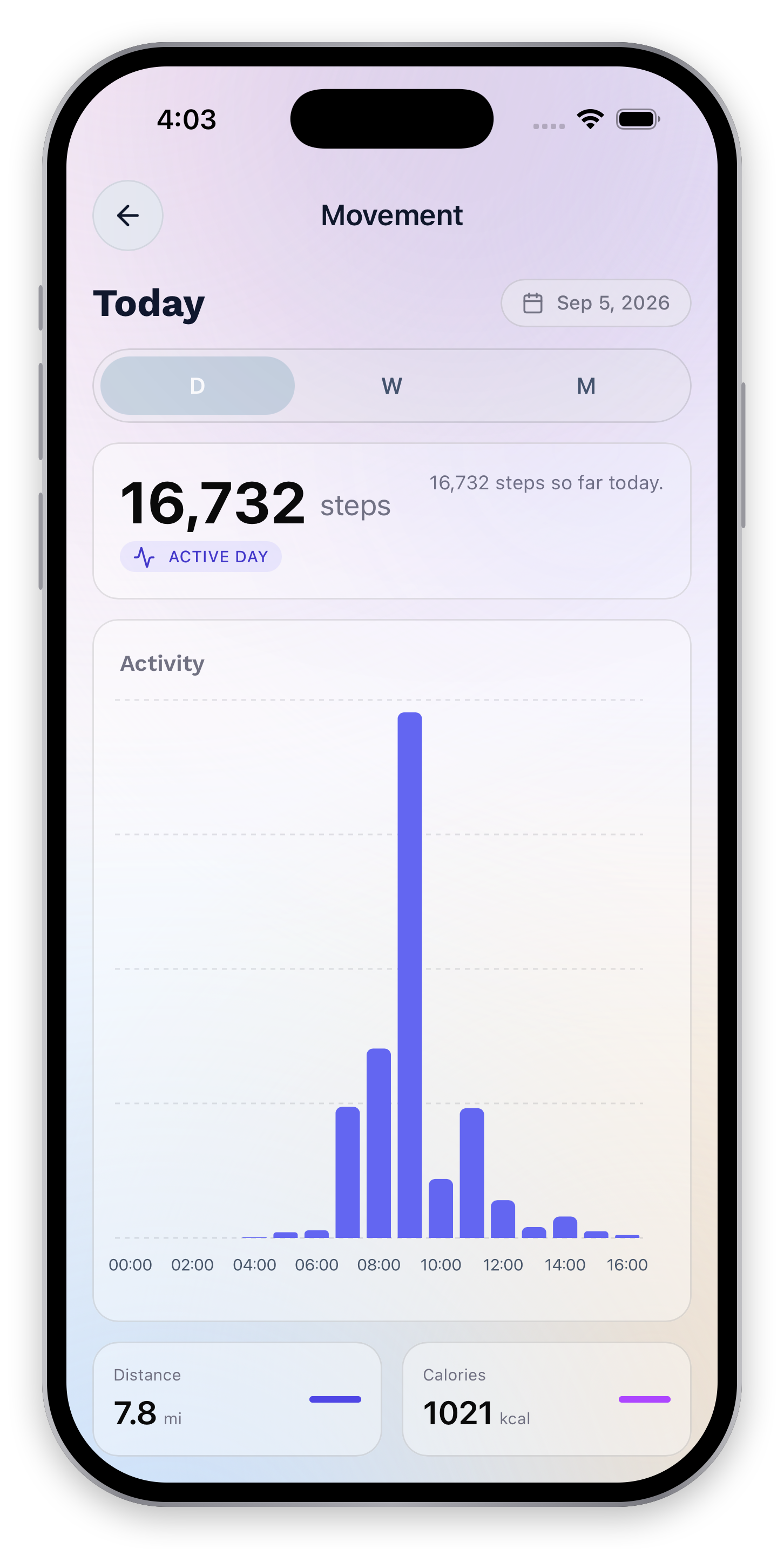
Movement detail showing steps, activity history, distance, and calories.

Small steps.
A fuller picture.

Steps, activity through the day, distance, and calories bring everyday movement into view.

A change deserves
a closer look.

A reading is only part of the story. Check its timing, understand the pattern, and review the context before deciding what to do next.
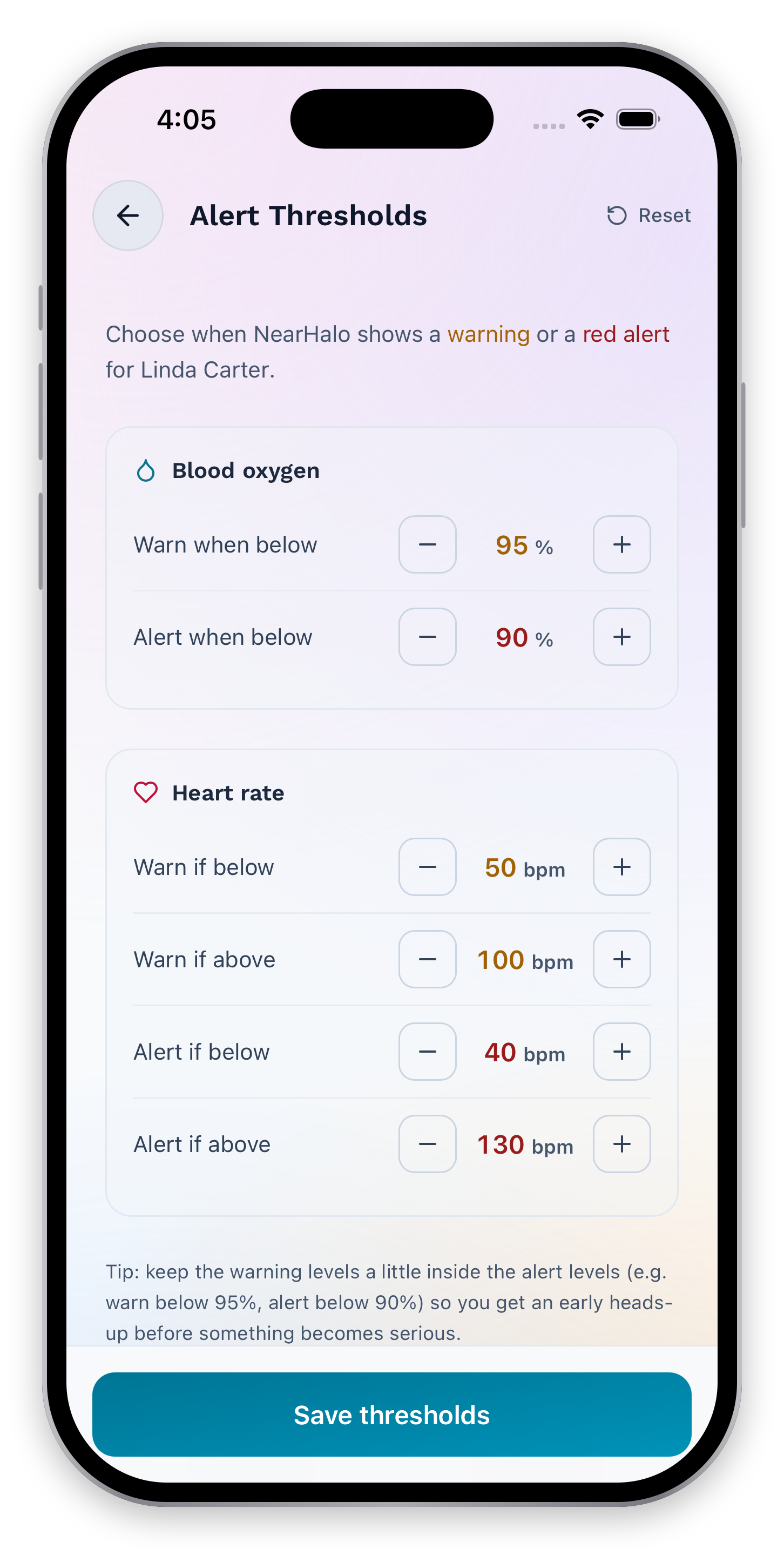
Alert threshold settings for heart-rate and blood-oxygen warnings and red alerts.

A heads-up.
Then a clear alert.

Separate warning and red-alert thresholds for heart rate and blood oxygen. Adjust the values in one place.
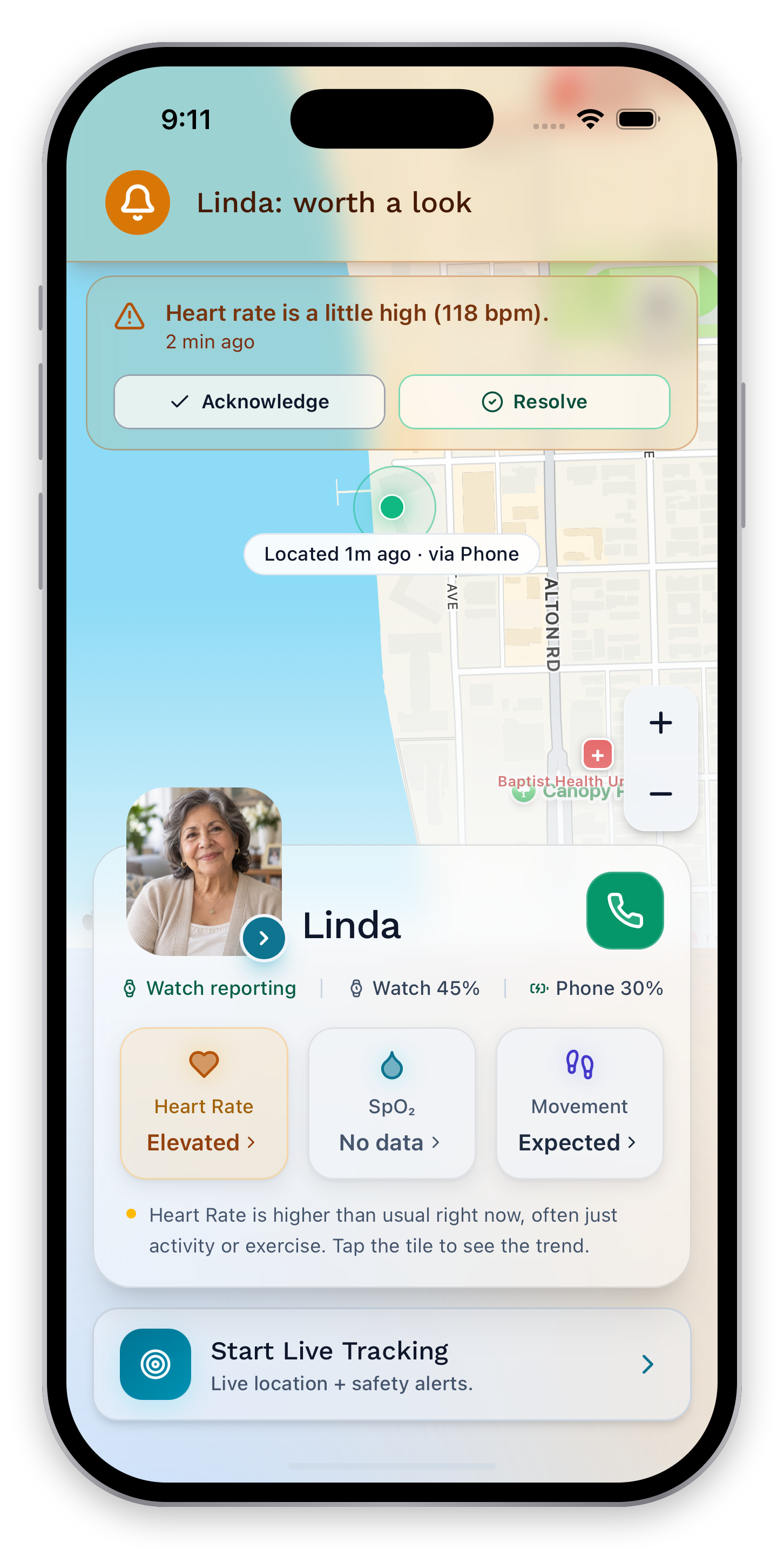
Caregiver dashboard showing a warning that calls for a closer look at a wellness change.

A change that’s
worth a look.

Amber brings a warning forward with its reading and timestamp. Acknowledge it or record a resolution.
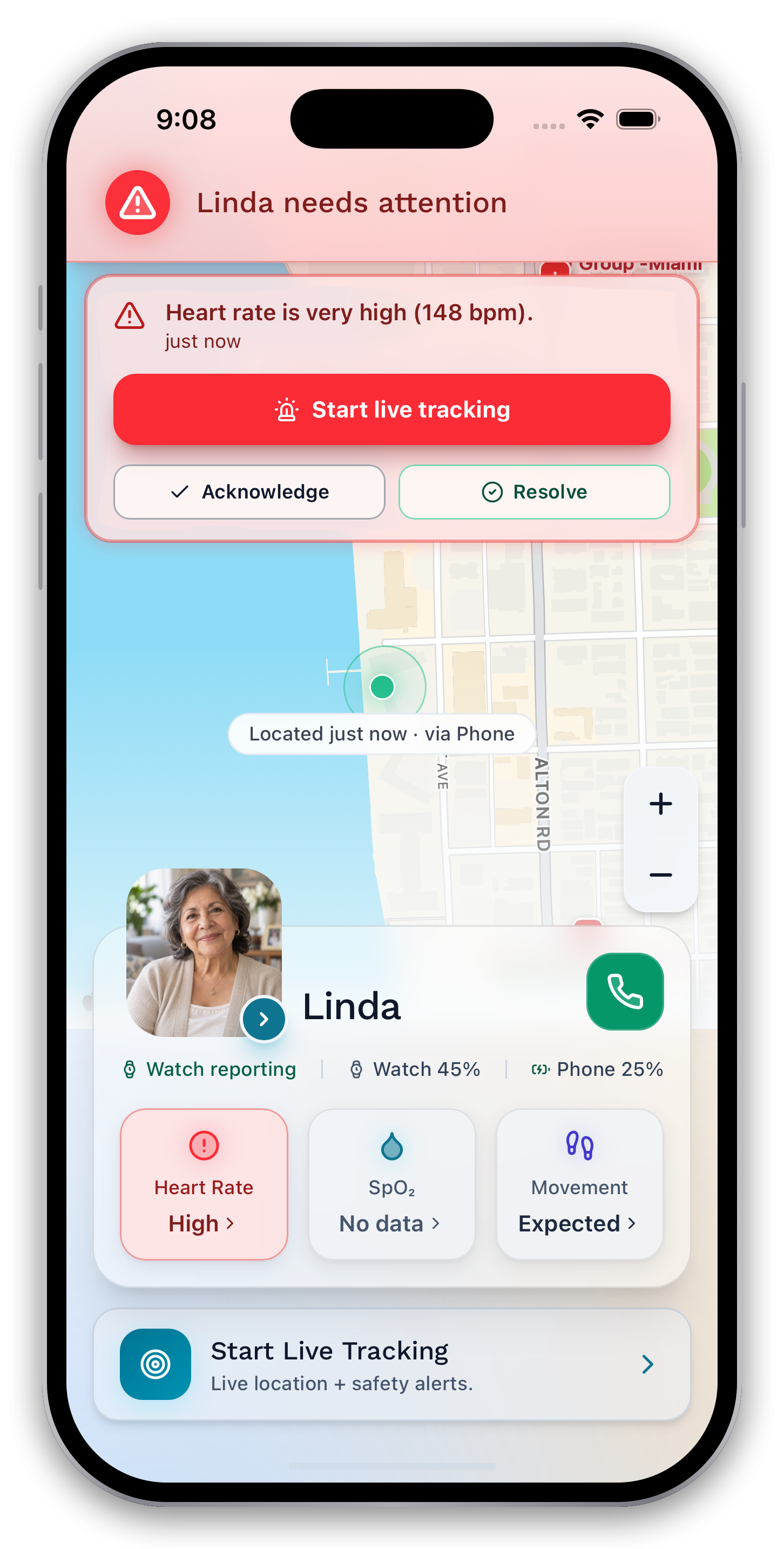
Caregiver dashboard with a red heart-rate alert and related status information.

When a reading
needs attention.

A red alert brings the changed heart-rate context to the front of the dashboard.
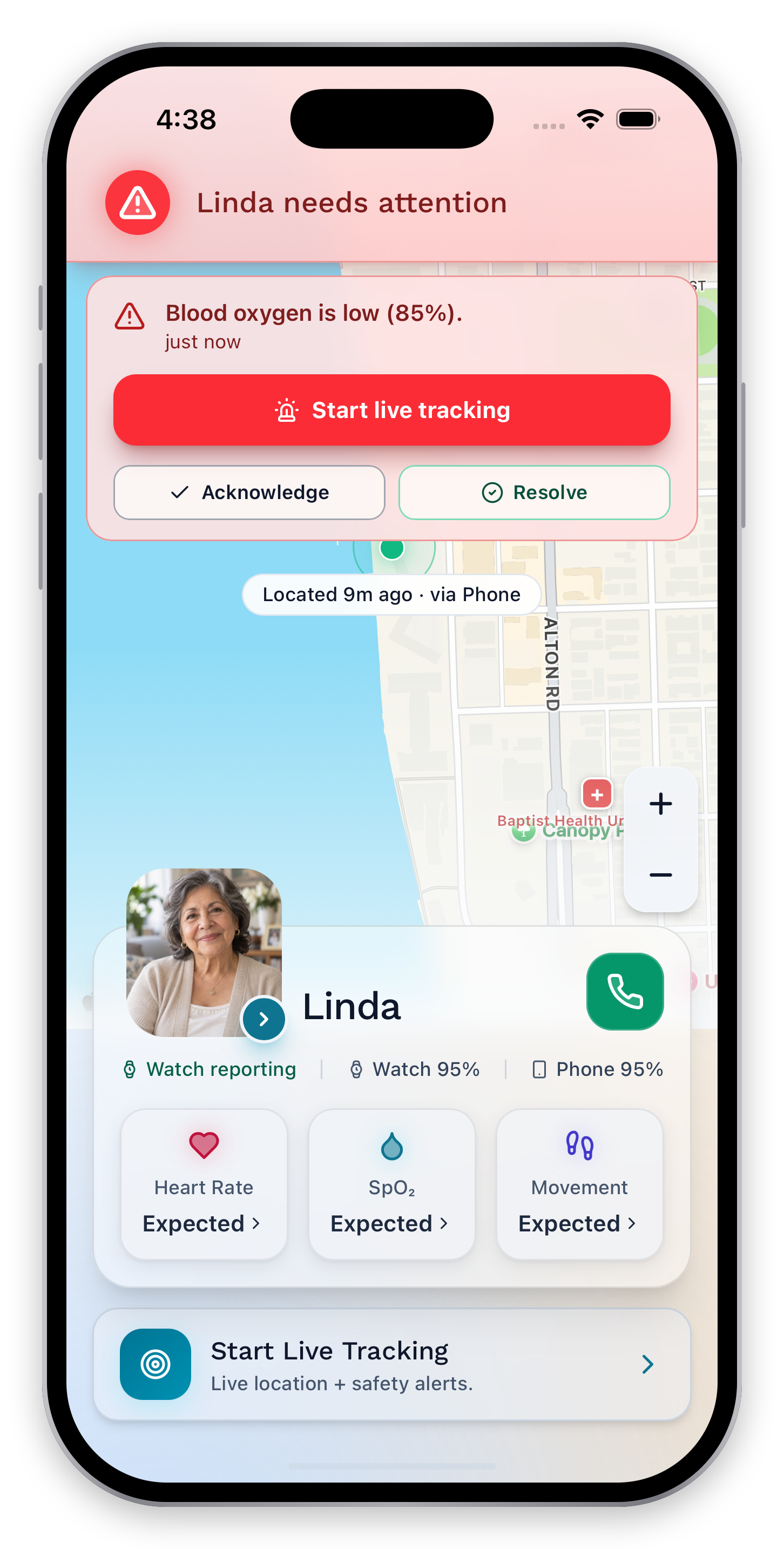
Caregiver dashboard with a red blood-oxygen alert and location context.

The signal.
The next step.

The alert explains what changed and makes the available actions clear: start live tracking, acknowledge, or resolve.
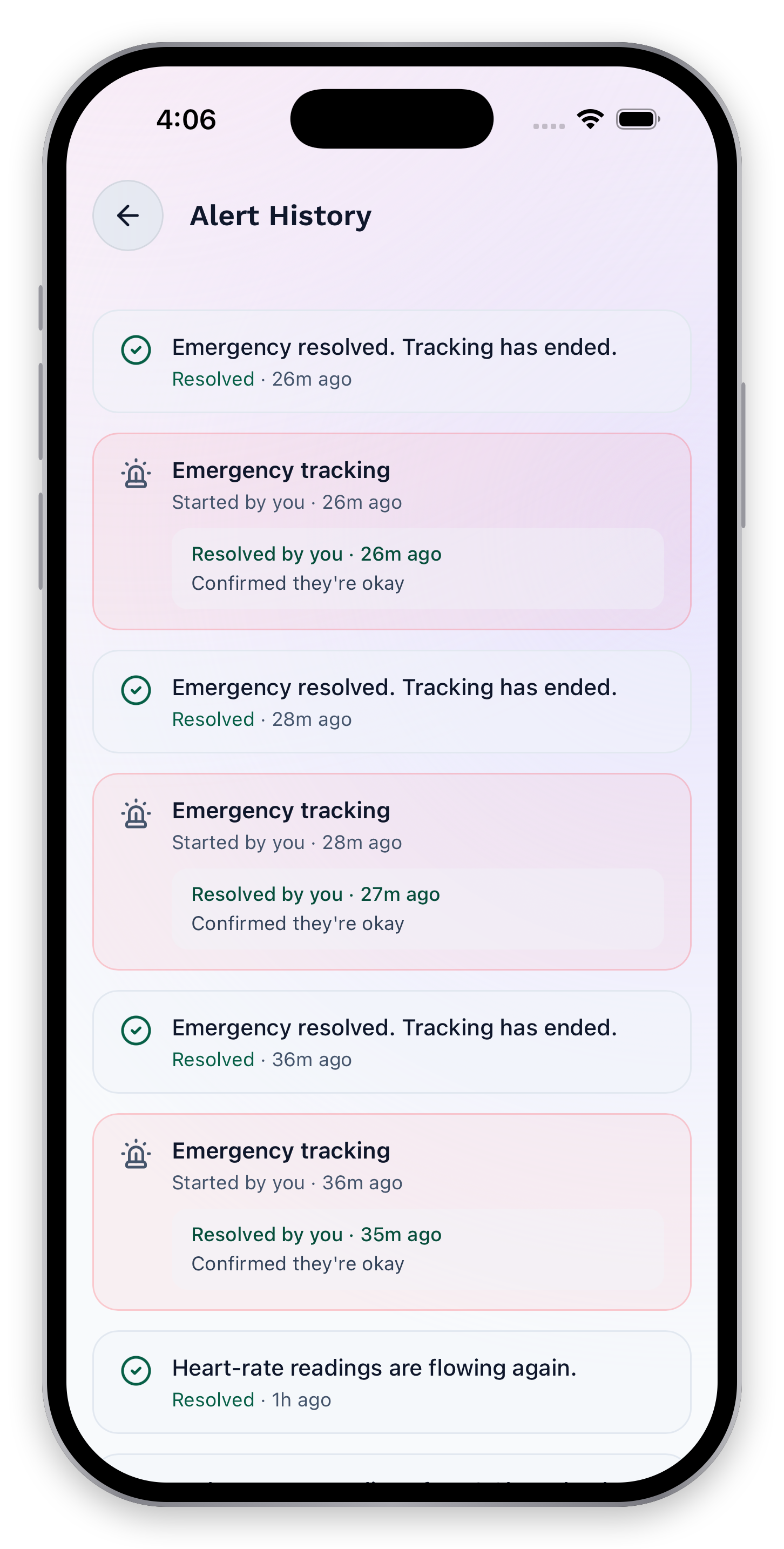
Alert history for reviewing previous events and their timing.

A shared memory
of what happened.

Review alerts and their outcomes, so the care team can follow the response after the moment passes.
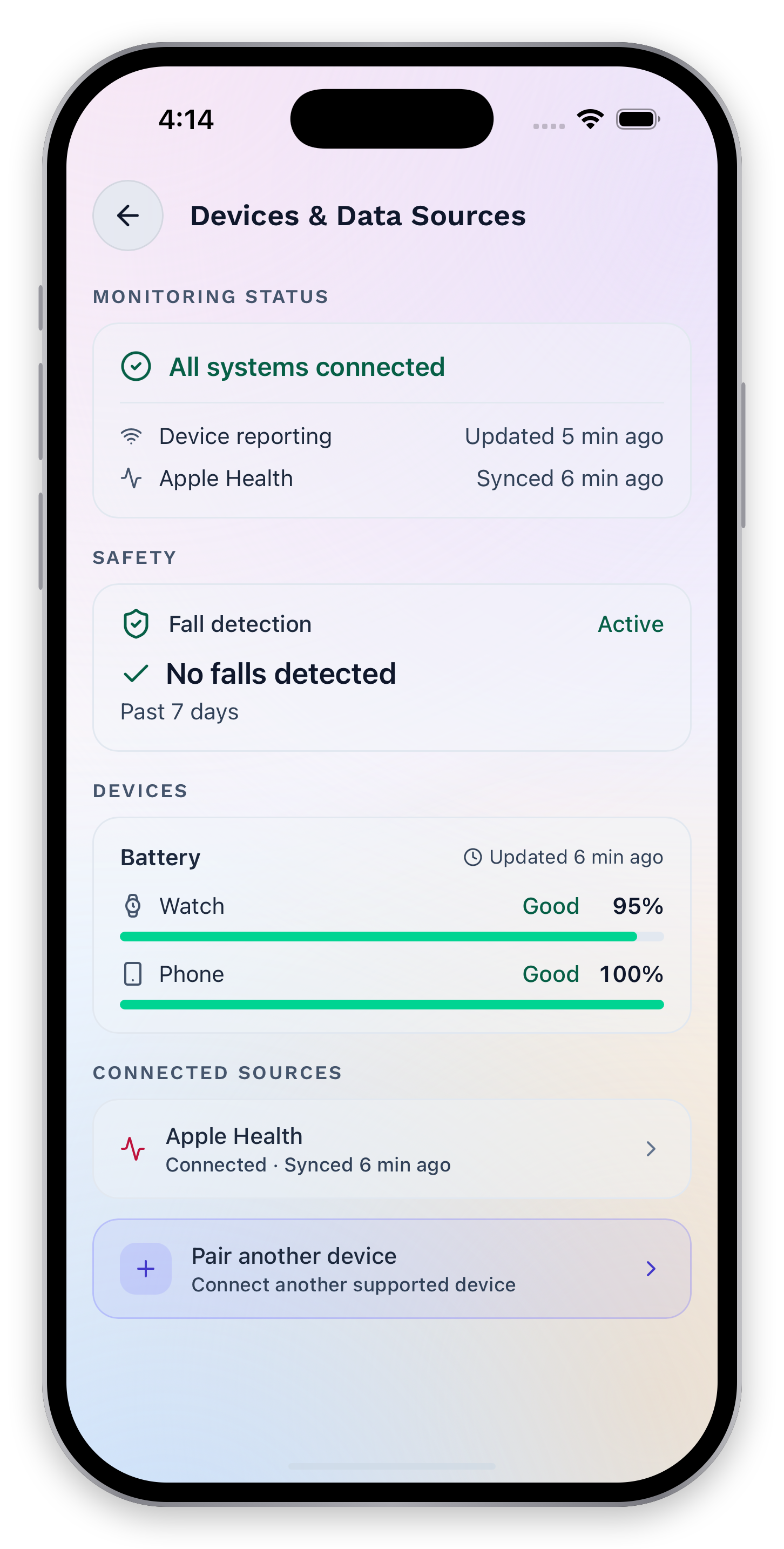
Devices and data sources showing fall-detection status and connected-device information.

Fall detection.
A clearer picture.

See whether fall detection is active and review the past seven days of fall history, with connected-device status close at hand.

Requires supported devices and available data. Not every fall will be detected.

Good care is
a shared understanding.

The person, the place, and the people who can help. Bring the context together so your family can decide on a next step.
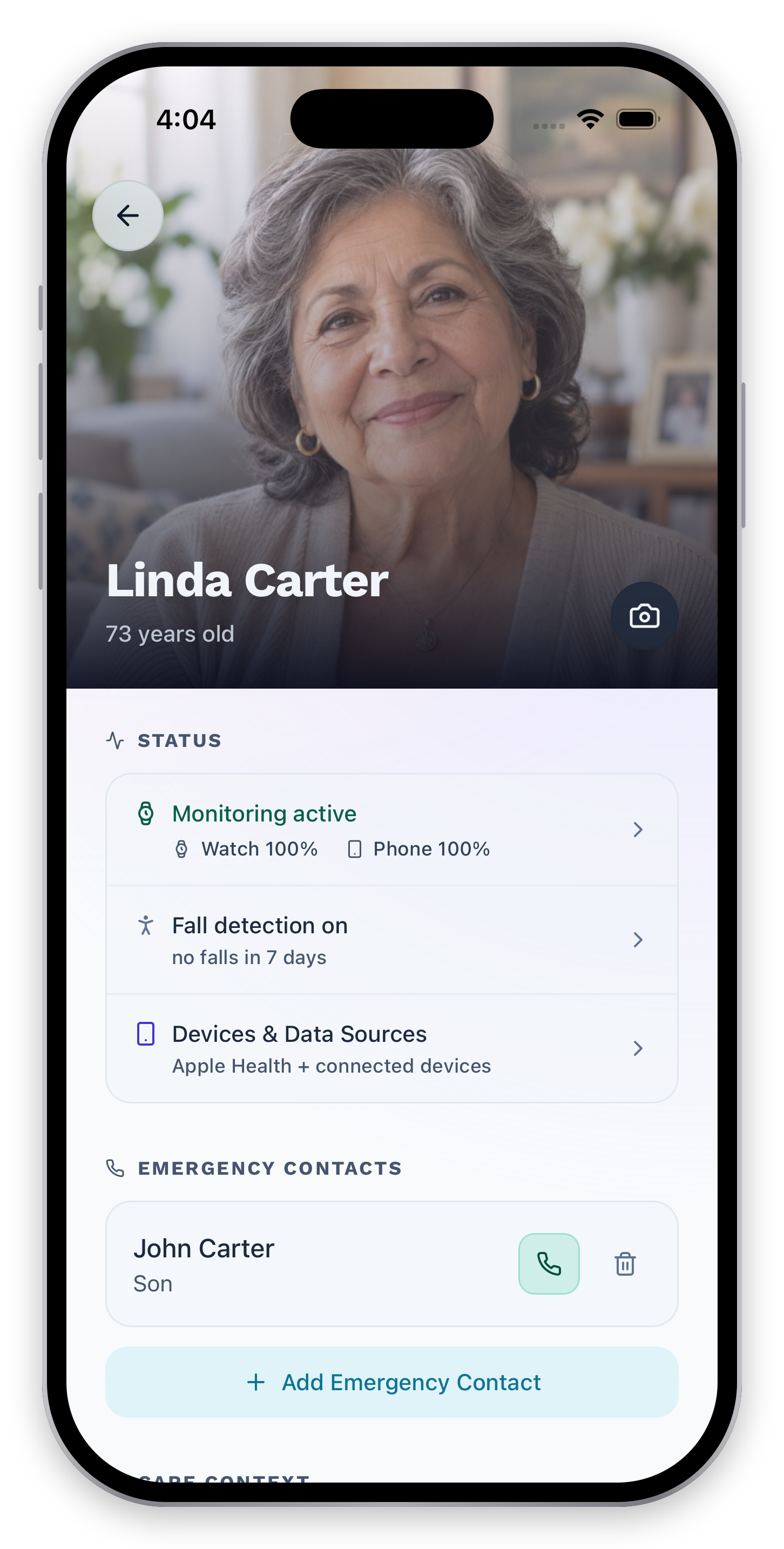
Care-recipient profile with connection status, fall information, and emergency contacts.

A person.
Not just a dashboard.

Linda’s profile brings connected-device status, fall detection, and emergency contacts together, with the context her care team needs.
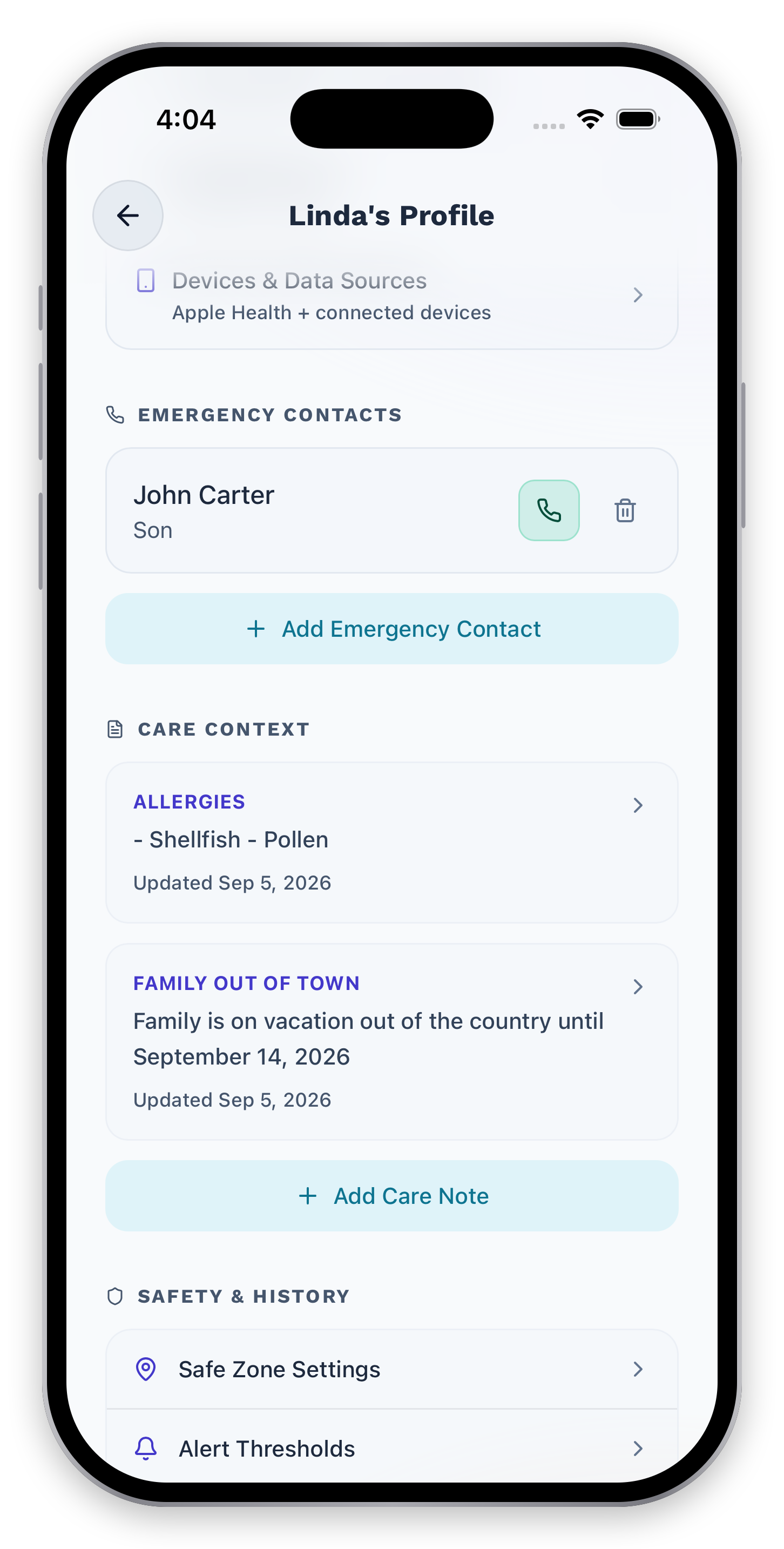
Care-recipient profile showing notes that give the care team personal context.

The details
worth remembering.

Keep care notes with the person they belong to. Shared context helps the next caregiver pick up where you left off.
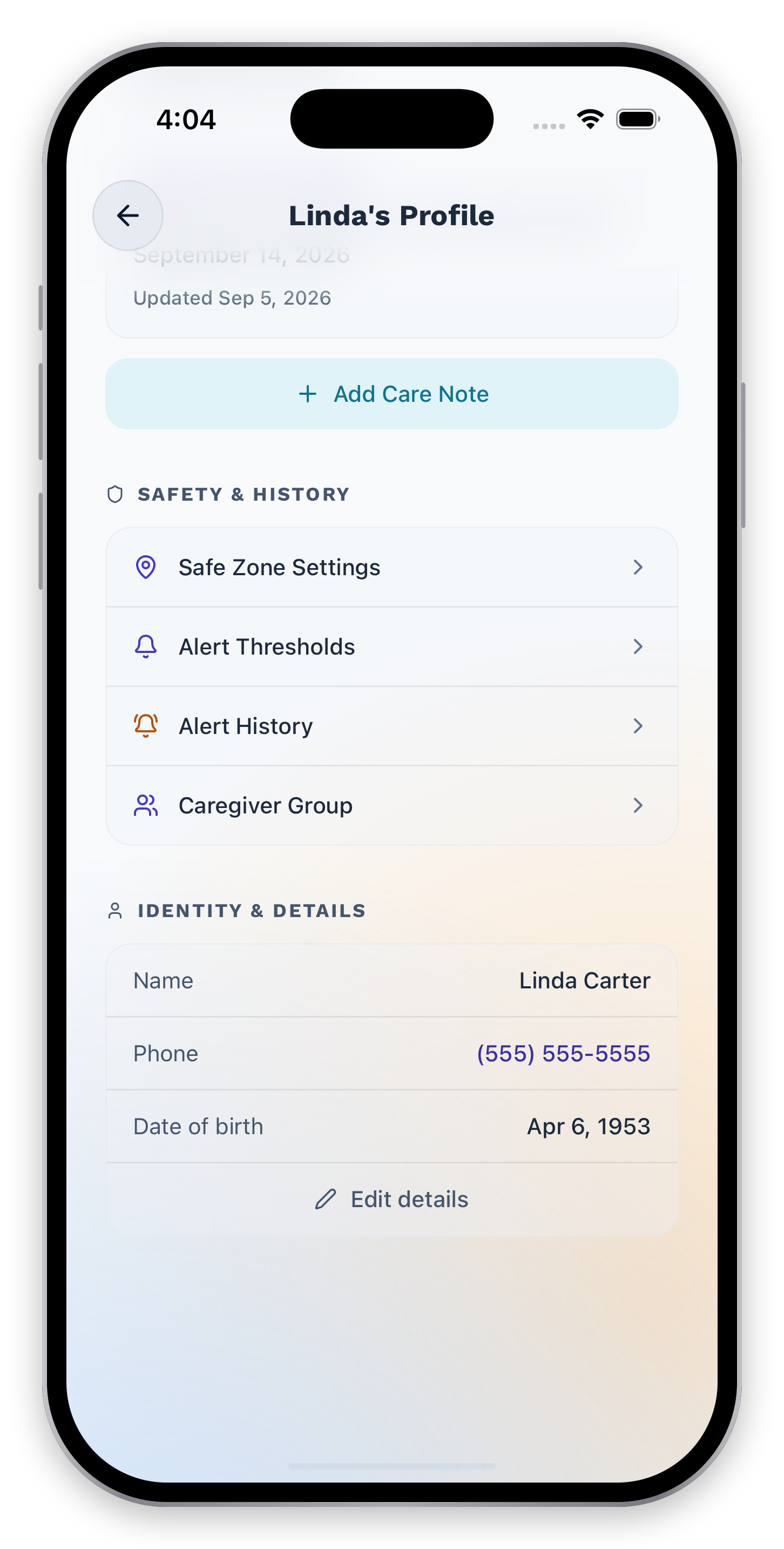
Care-recipient profile with safety settings and alert-history controls.

Everything has
its place.

Safe zones, thresholds, alert history, and the caregiver group are all within reach from the profile.
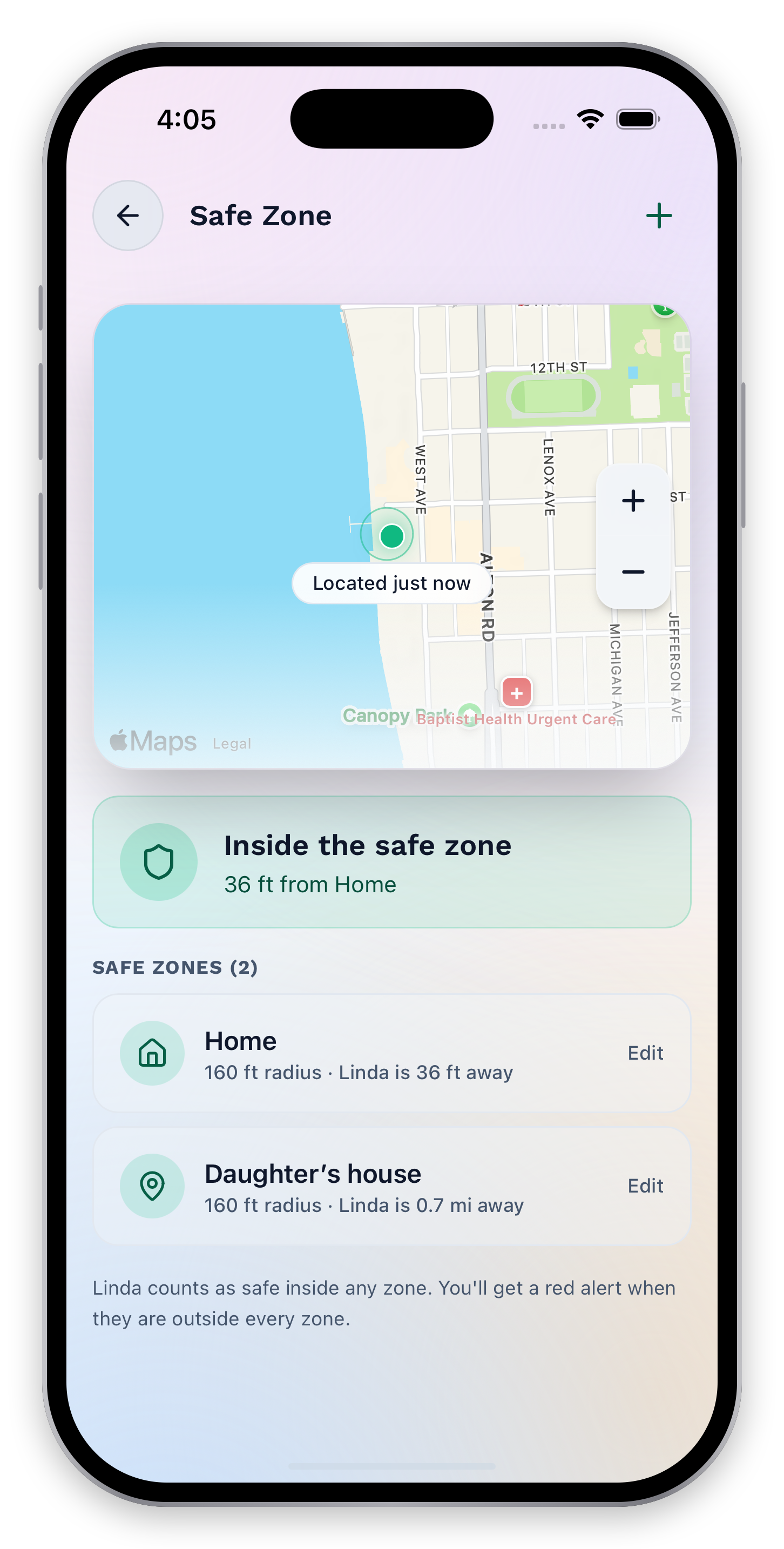
Safe-zone settings for managing places and their boundaries.

Familiar places.
Clear boundaries.

Define the places that matter and see the latest available location alongside safe-zone context.
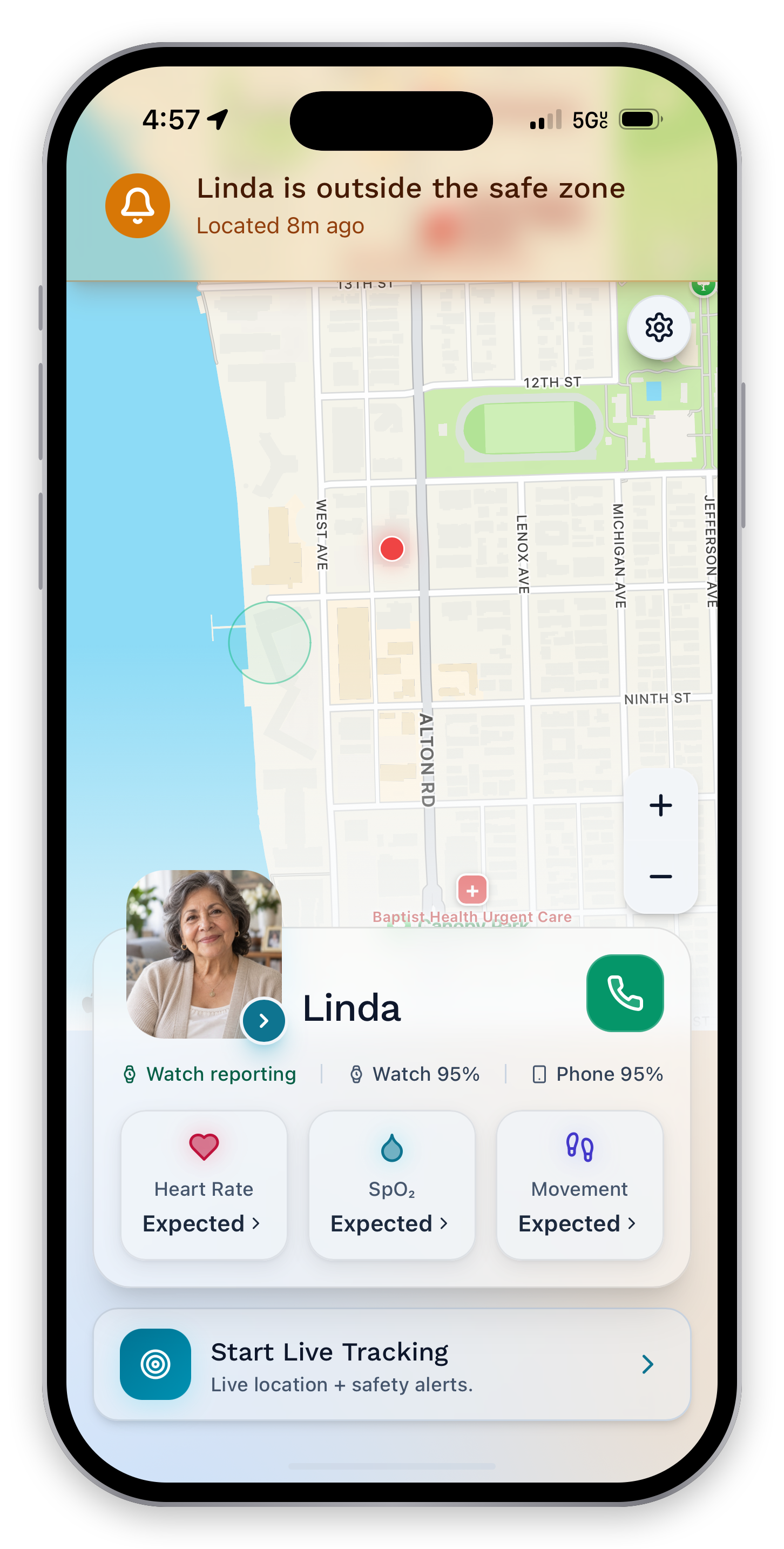
Caregiver dashboard showing a location outside the selected safe zone.

When they step
beyond the zone.

A change in location gets its own clear status, helping the care team understand what needs a closer look.
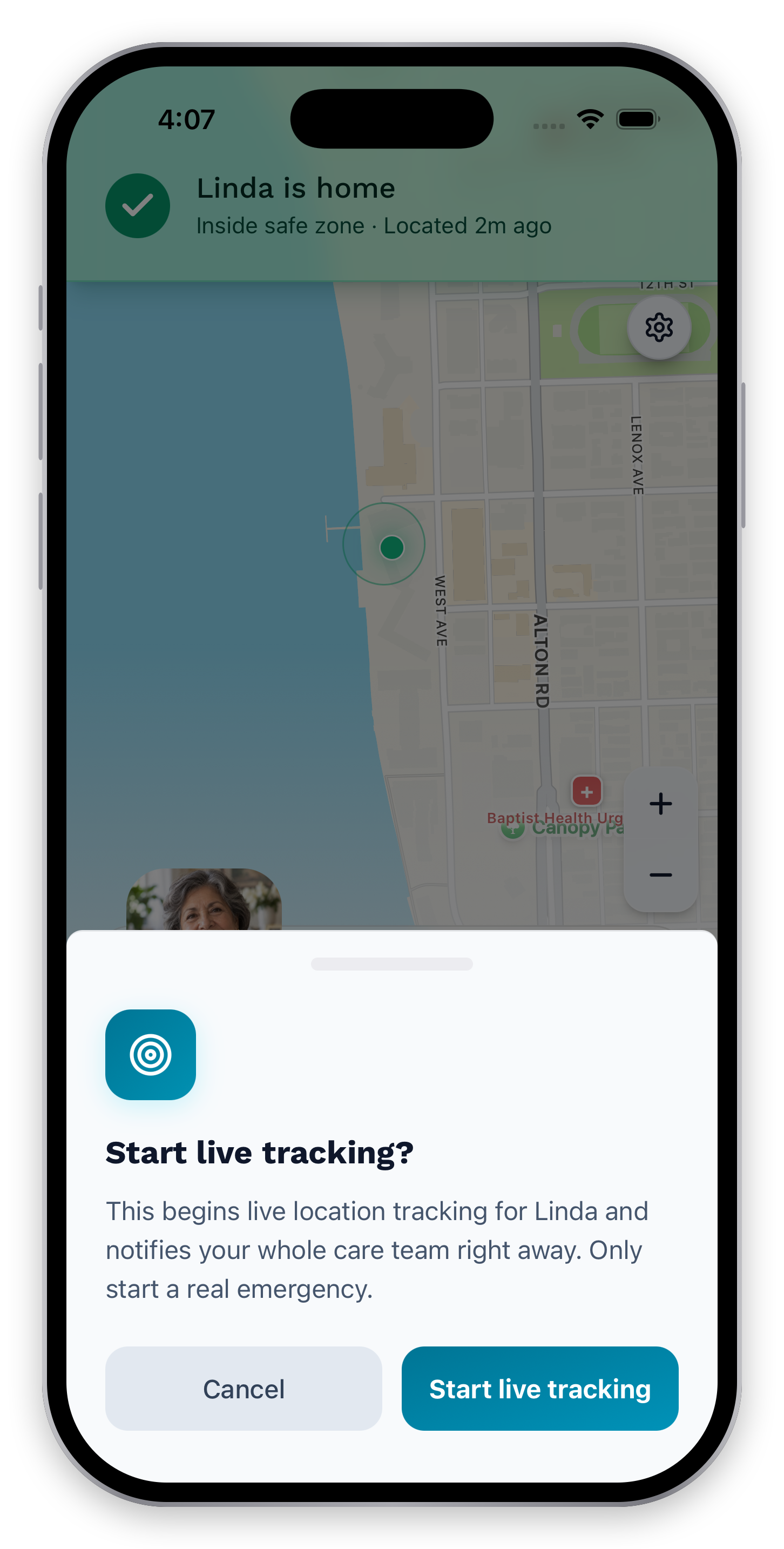
Live-tracking confirmation explaining the action before a tracking session starts.

Know what happens
when tracking starts.

The confirmation brings the next action into focus before you begin a live tracking session.
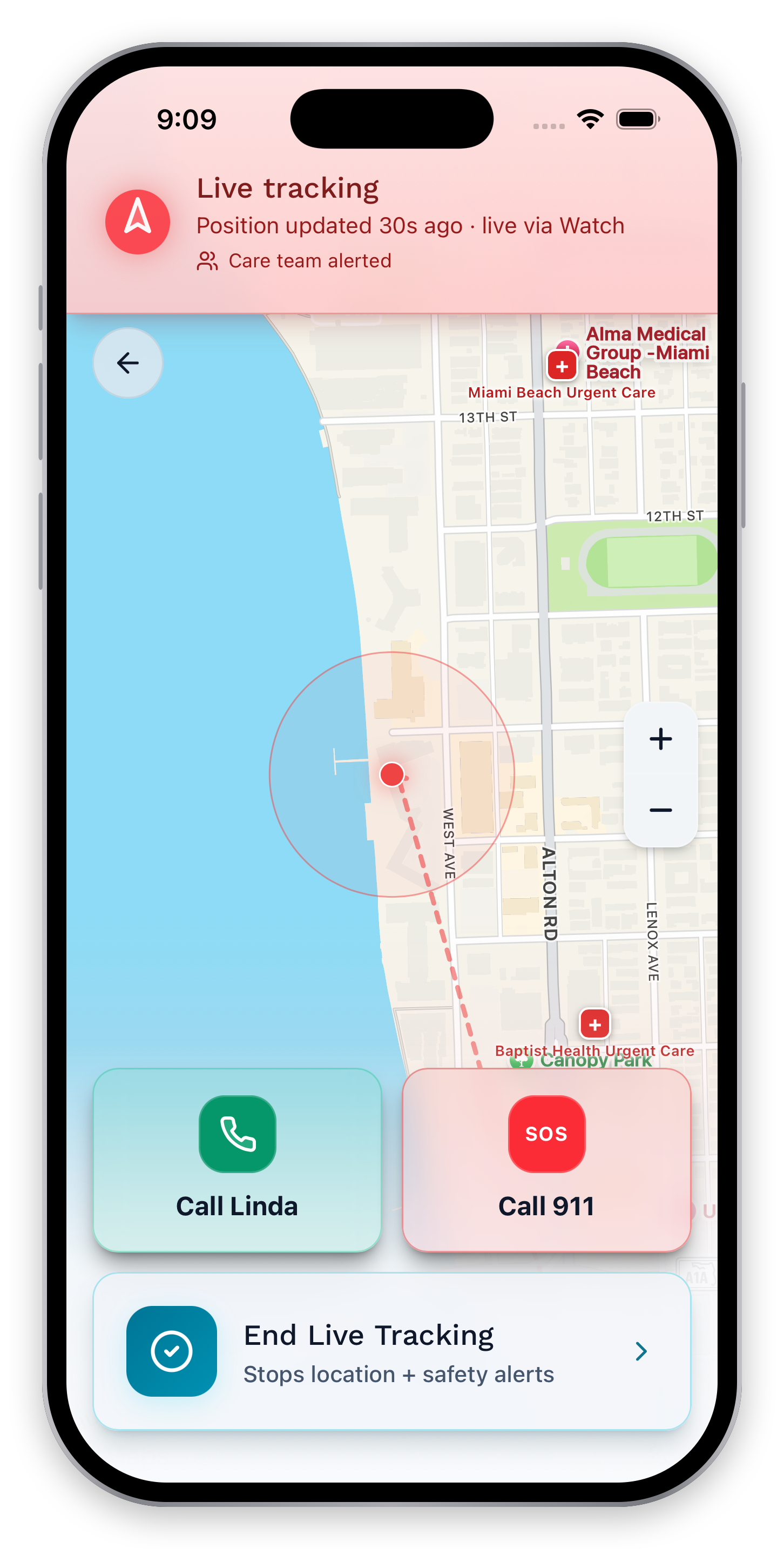
Active live-tracking map with location updates and care-response controls.

Follow the moment
as it unfolds.

Follow the latest location and trail, check when it updated, and see who was alerted. Call Linda or end the session right from the map.
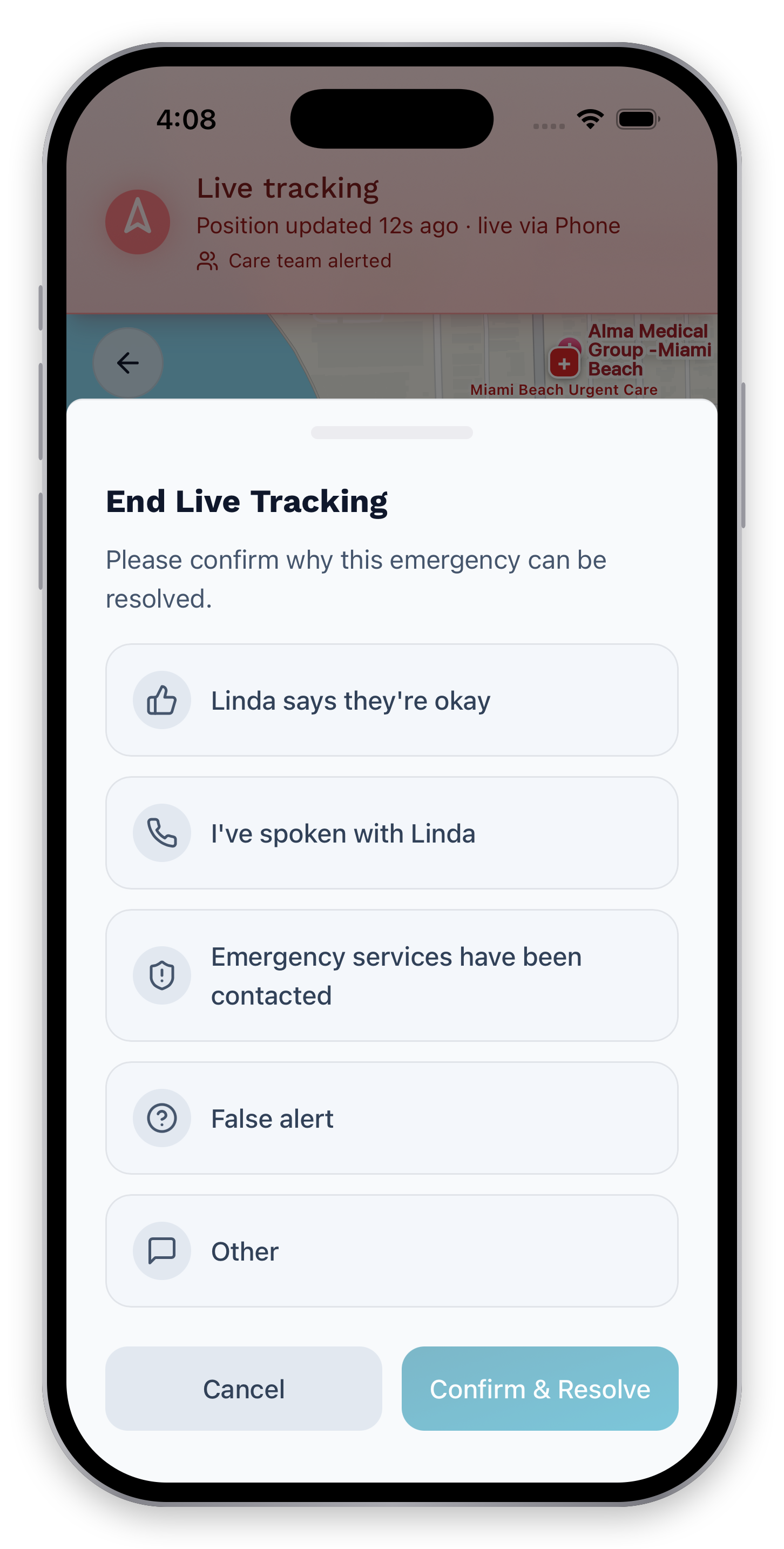
End-tracking screen for resolving and closing a live-tracking session.

Close the loop.

End the tracking session and record the outcome, so the response has a clear ending.
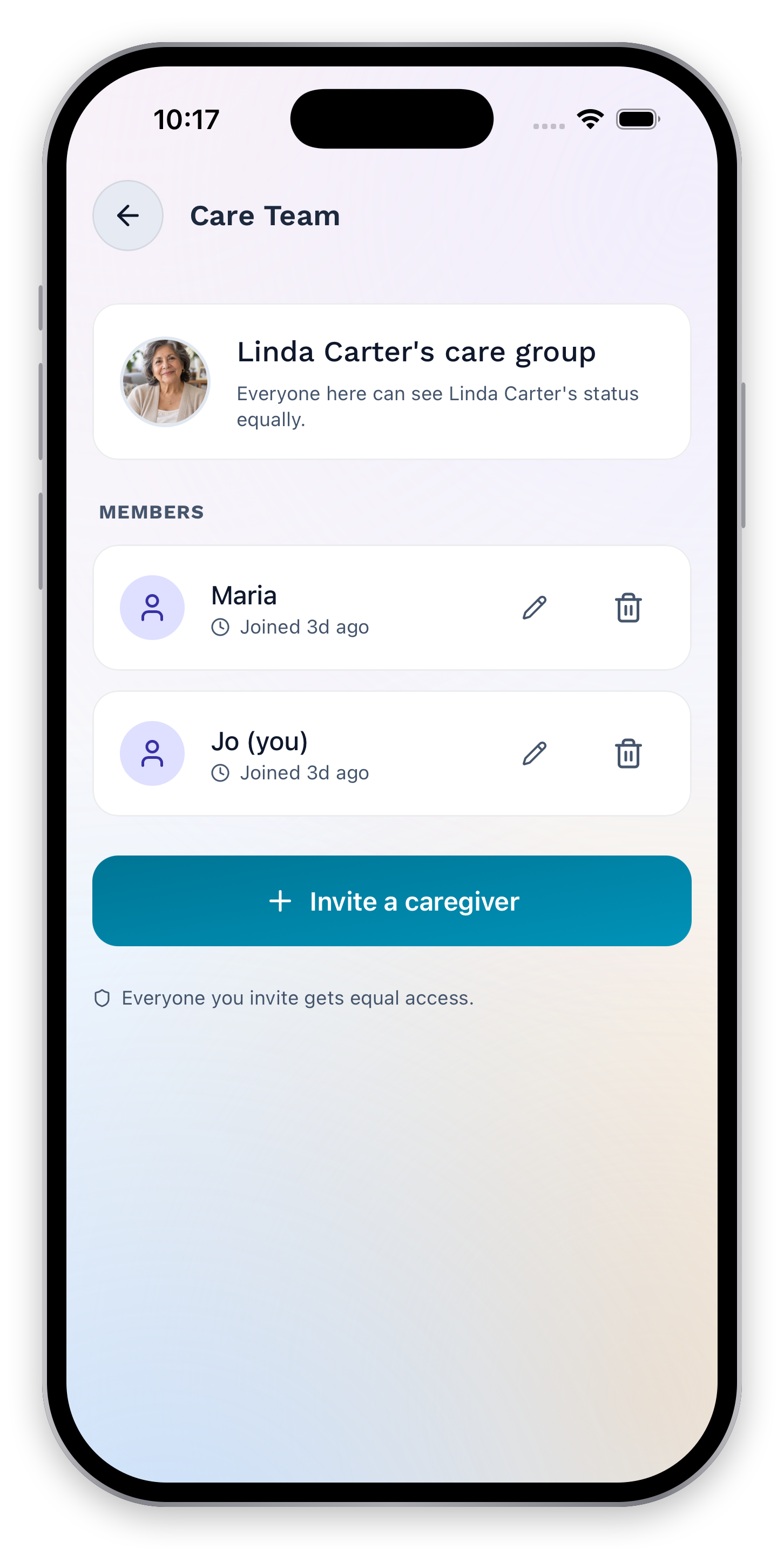
Linda Carter’s care team, showing Maria and Jo as members with equal access and an Invite a caregiver button.

Care feels better
when it’s shared.

See the people connected to Linda’s care and manage invitations from the caregiver group. Bring everyone into one shared view.

NearHalo is not a medical device or emergency service.

Keep your independence.
Keep your connection.

Now, the care-recipient app: a simpler view for the person receiving care. Choose when to share and reach your caregiver from your phone or Apple Watch.
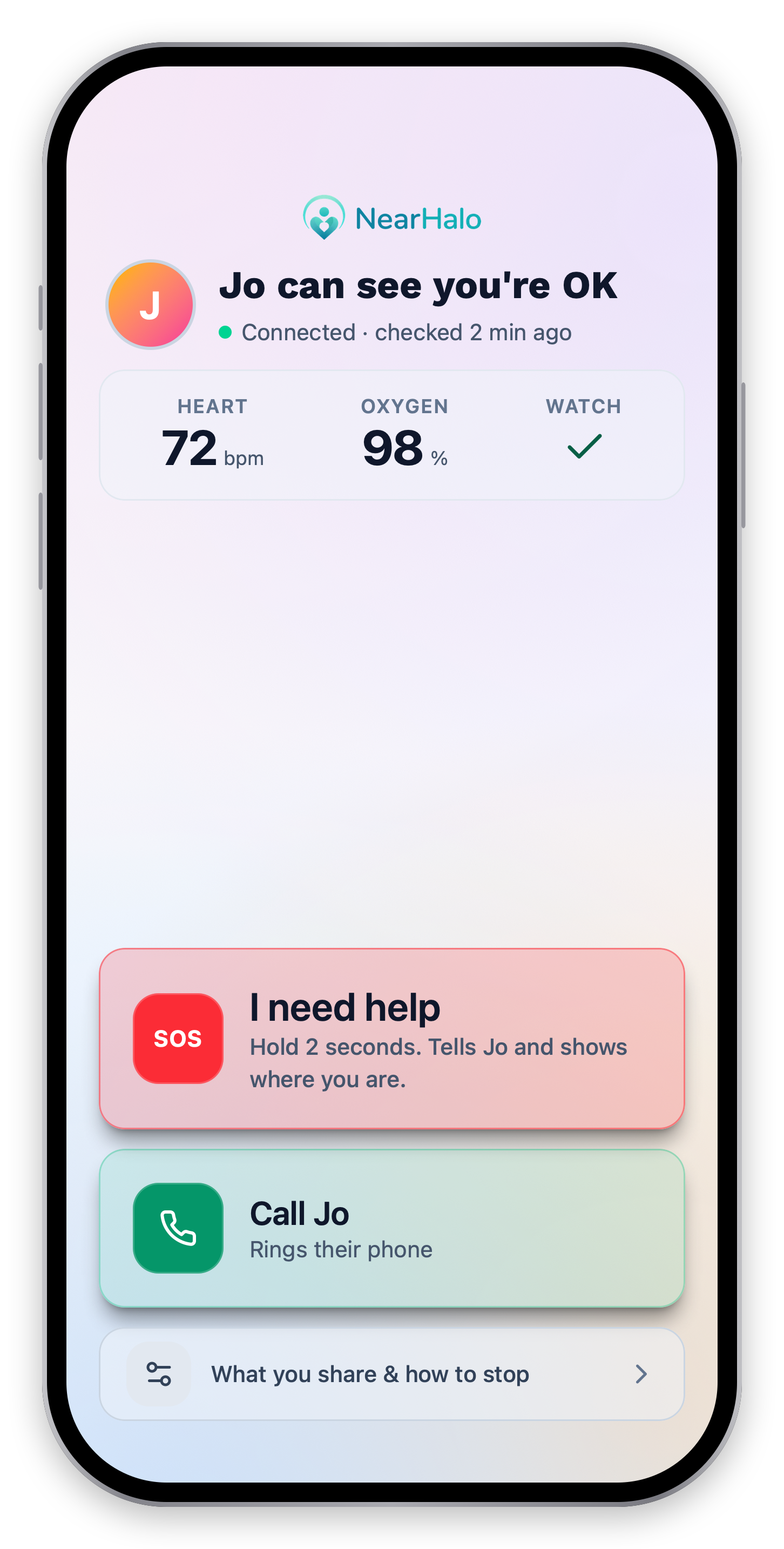
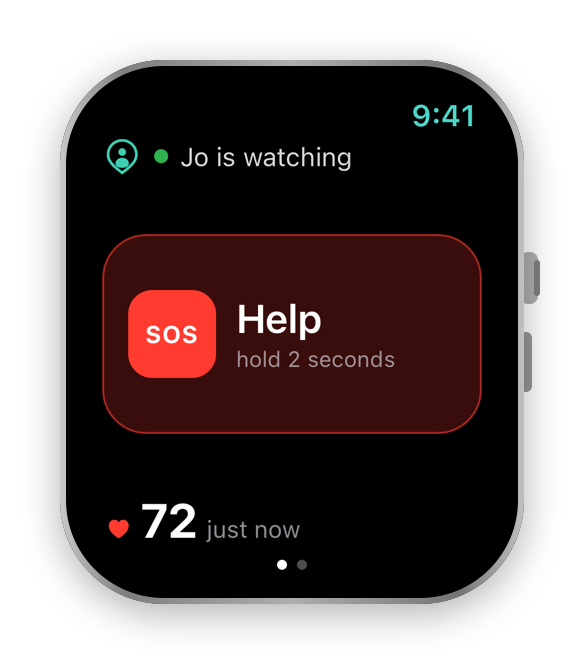
NearHalo recipient phone home showing connection to Jo, wellness readings, a help button, and a caregiver call button. NearHalo Apple Watch home showing Jo is watching, a hold-for-two-seconds Help control, and a recent heart-rate reading.

Your day.
Your connection.

Your phone brings your caregiver connection, available wellness readings, and calling together. Your Watch keeps your connection, heart rate, and help control at your wrist.
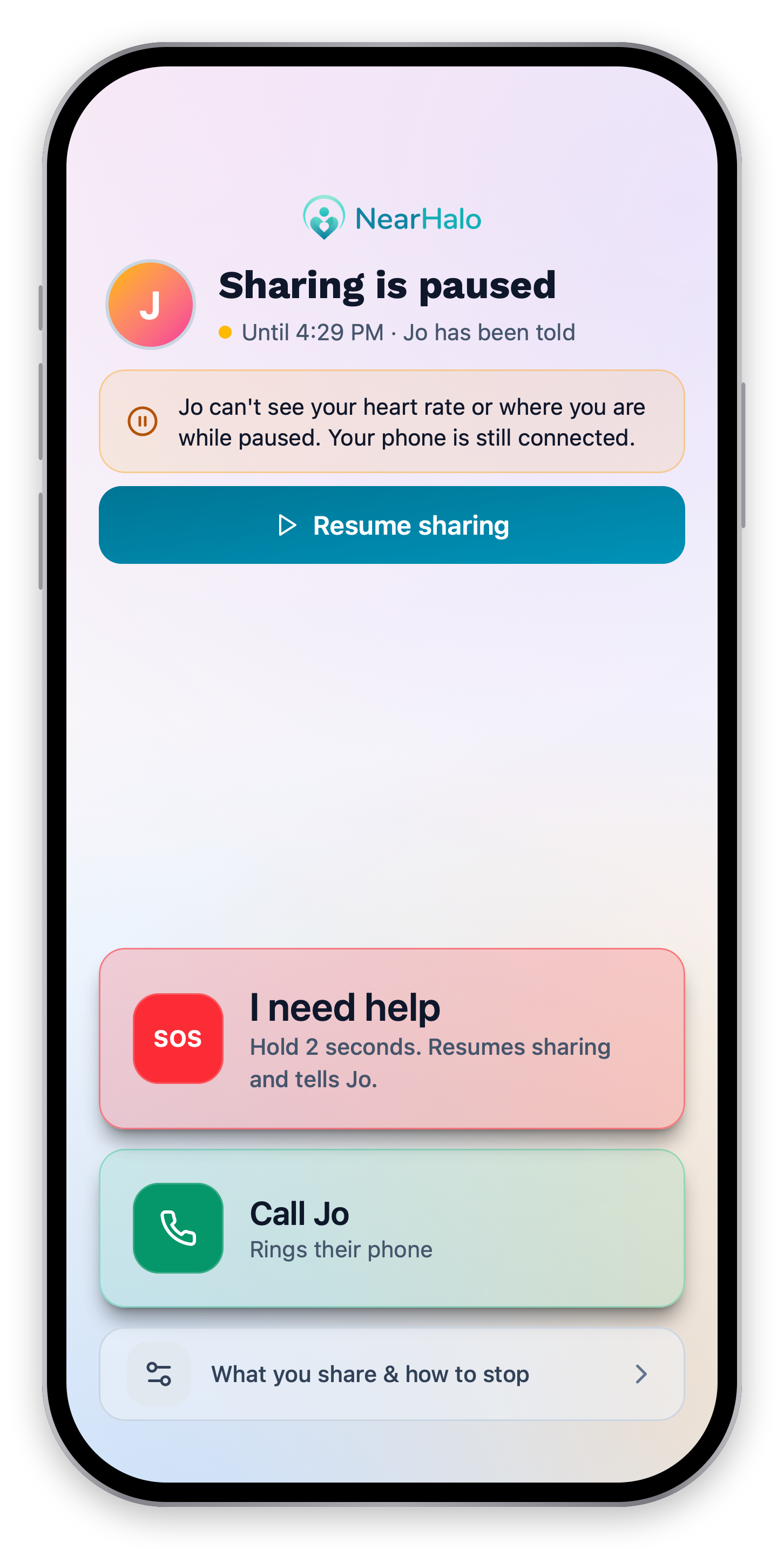
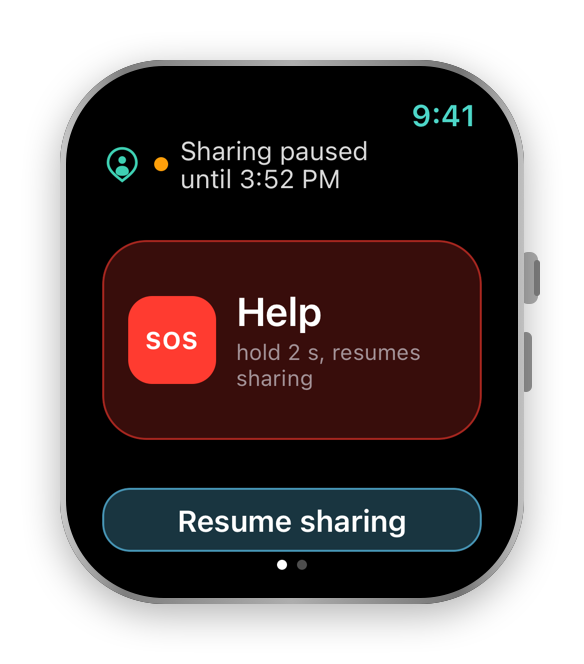
NearHalo phone showing sharing paused until 4:29 PM, an explanation that heart rate and location are hidden while paused, and Resume sharing. NearHalo Apple Watch showing sharing paused until 3:52 PM, a Help control that resumes sharing, and a Resume sharing button.

A little privacy.
On your terms.

See when sharing is paused on your phone and Watch. Resume when you’re ready. If you need help while paused, sending a request resumes sharing.
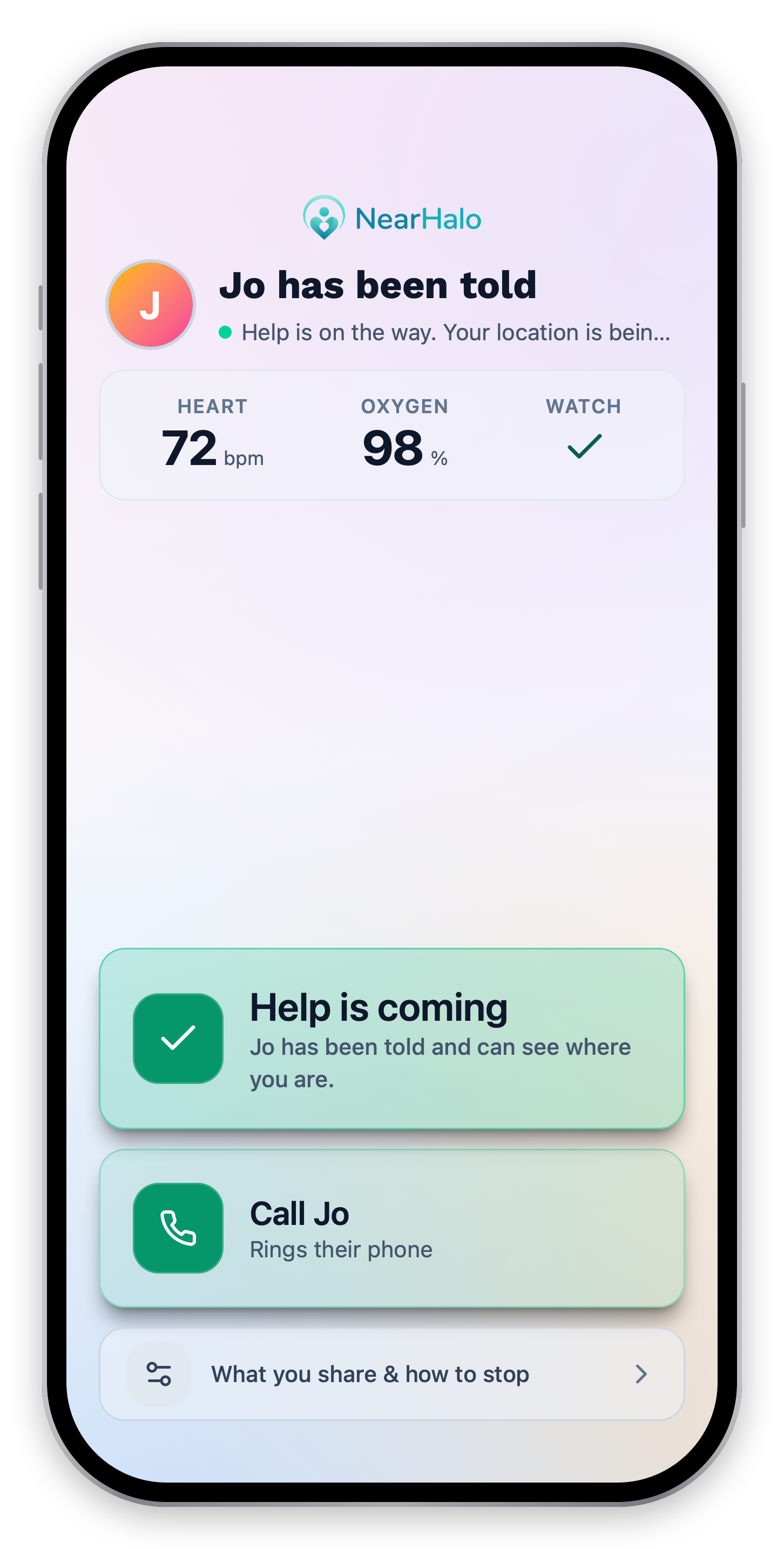
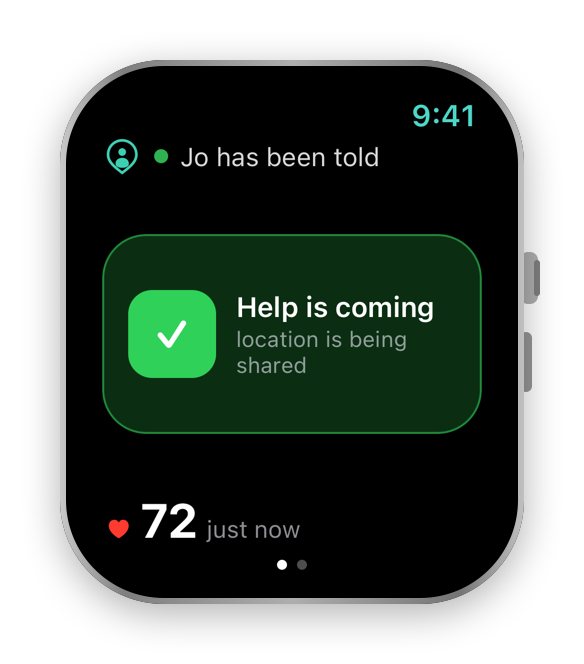
NearHalo phone help-request confirmation showing Jo has been told and can see the recipient’s location, with Call Jo below. NearHalo Apple Watch help-request confirmation showing Jo has been told and location is being shared.

Ask for help.
From either device.

Hold the help control for two seconds on your phone or Watch. The confirmation shows your caregiver has been notified and your location is being shared.

This notifies your caregiver, not emergency services. Delivery does not guarantee that someone has seen the request or is on the way.

Illustrated example · not live app data

Care recipient“I need help.”

A deliberate two-second hold starts the request.

CaregiverA connection is already in place.

The request goes to the person chosen to help.

One request.
Both sides of care.

Follow an example from the recipient’s help control to the caregiver’s next step.

A notification is not a guarantee of acknowledgment or response. NearHalo does not dispatch emergency services.

“I wanted him to keep his independence. I also wanted our family to know when he might need us.”

Joseph Pagan
Founder of NearHalo

It started
with my dad.

After my father suffered a stroke while living alone, I wanted a way for our family to stay connected without taking away his independence. That is why I built NearHalo.

Read our story
For the caregiverMore context.
A closer connection.
For the care recipientYour independence.
Your choice to share.

More connection.
More independence.

Bring NearHalo into the everyday moments of caring for someone you love.

For family caregiving and general wellness. Not a medical device or emergency service.

Questions about NearHalo?

A few things to know before you get started.

What is NearHalo, and who is it for?

NearHalo is a family caregiving and wellness app. A caregiver can check the latest available location, wellness readings, device status, and alerts for someone who has chosen to share with them. The care recipient has a simpler view for staying connected, managing sharing, and asking their caregiver for help.

What is different about the caregiver and care-recipient views?

The caregiver view brings together vitals, location, care notes, safe zones, alert history, and the care team. The recipient view focuses on their connection to a caregiver, available wellness readings, sharing controls, and a help button. This tour shows the caregiver experience first, followed by the recipient’s phone and Apple Watch views.

Do I need an Apple Watch to use NearHalo?

An Apple Watch is optional, but some readings and features depend on compatible connected devices. Heart rate, blood oxygen, activity, and fall-related information are not available from every device. Availability also depends on permissions, data sources, battery, and connectivity.

What information can my care team see?

Depending on your permissions and connected devices, authorized care-team members can see available wellness readings, location, device status, profile information, and alert context. NearHalo is designed around the care relationship you establish, not public sharing.

Can I pause or stop sharing?

Yes. The recipient view includes sharing controls. While sharing is paused, the phone explains that your caregiver cannot see your heart rate or location and shows when sharing will resume. You can resume from the phone or Watch. Sending a help request while paused resumes sharing. Stopping new sharing does not automatically delete previously stored information.

What happens when I press the recipient’s help button?

Hold the help control for two seconds to send a request to your caregiver and share your location. The confirmation shows that the request has been sent. It does not mean emergency services have been contacted, that the caregiver has read the request, or that someone is definitely on the way. In an emergency, contact your local emergency services directly.

Does NearHalo guarantee fall detection or alert delivery?

No. Fall-related information depends on supported devices and available data; not every fall will be identified. Location updates, readings, and notifications may be delayed, incomplete, or unavailable. NearHalo does not guarantee someone’s safety or replace regular check-ins.

Is NearHalo a medical device or emergency service?

No. NearHalo supports caregiving coordination and general wellness awareness. It does not provide medical advice, diagnose or treat conditions, or provide professional emergency response. Do not use it as a substitute for medical care or emergency services.

Where can I download NearHalo or log in?

Download NearHalo from the Apple App Store. You can also open the NearHalo web app using Log in in the top navigation.

How do I delete my account or get support?

In the app, go to Settings, Account, and Delete account. For help with deletion, sharing, or other questions, visit Support or contact us. The Privacy Policy explains how personal information is handled.

Explore the app · screenshot demonstration

Explore this screen

Choose a numbered detail to take a closer look.

This is a guided screenshot, not a working app. No calls, alerts, or help requests are sent.